
A very cheerful Japanese working woman, with one of her breasts exposed, is carrying three huge packs of charcoal on what appears to be a country road.
During the summer, women in the countryside often had much of their body exposed when they worked. Many men wore only a loincloth. Even in the city. This was especially the case for laborers and poor farmers.
Prudish Western visitors, used to Victorian morality, generally were greatly shocked by all this nudity and frequently wrote about it in their diaries and letters.
Nineteenth-century English travel-writer Isabella Lucy Bird (1831-1904), who in 1887 (Meiji 20) travelled deep into Japan’s heartland, described in her book Unbeaten Tracks her surprise upon seeing the scarce clothing of the people1:
I write the truth as I see it, and if my accounts conflict with those of tourists who write of the Tokaido and Nakasendo, of Lake Biwa and Hakone, it does not follow that either is inaccurate. But truly this is a new Japan to me, of which no books have given me any idea, and it is not fairyland. The men may be said to wear nothing. Few of the women wear anything but a short petticoat wound tightly round them, or blue cotton trousers very tight in the legs and baggy at the top, with a blue cotton garment open to the waist tucked into the band, and a blue cotton handkerchief knotted round the head. From the dress no notion of the sex of the wearer could be gained, nor from the faces, if it were not for the shaven eyebrows and black teeth. The short petticoat is truly barbarous-looking, and when a woman has a nude baby on her back or in her arms, and stands staring vacantly at the foreigner, I can hardly believe myself in “civilised” Japan.
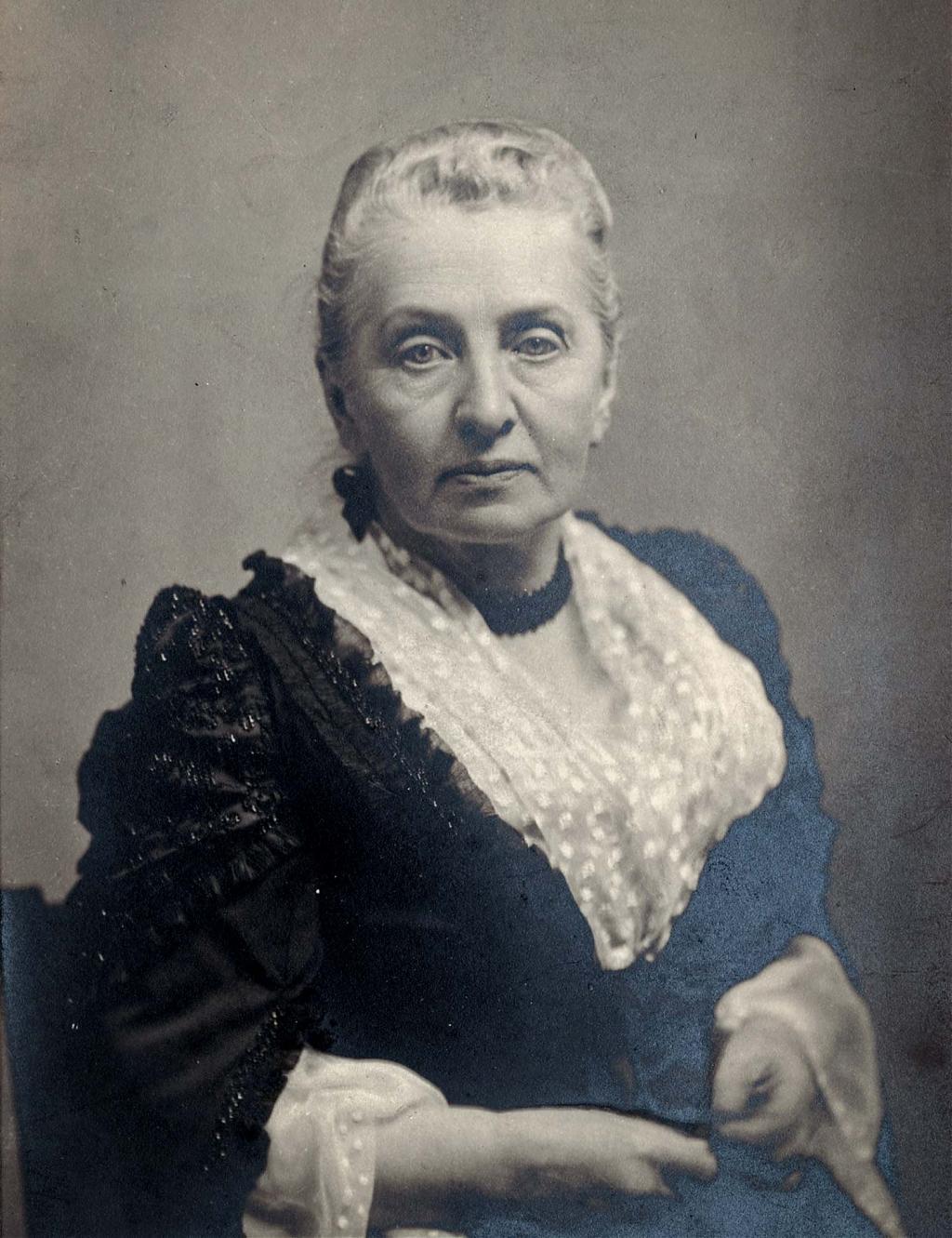
This is one of the few times in her book that she was critical of what she saw. Unbeaten Tracks shows Bird as an amazingly open-minded person who was not easily fazed. At a time when foreigners were still extremely rare, she travelled from Tokyo to Nikko, then north through Aomori and the interior of Hokkaido, only accompanied by a Japanese guide.
No western woman had ever traveled alone to the interior of Japan, in many of the places that she visited she was actually the very first foreigner. Often, roads were virtually non-existent and accommodations infested with flees and curious people who would open up the sliding doors of her room to see her change clothes or sleep.
But in spite of her deprivations, she managed to make a very honest account of Japan as it was during the early Meiji Period (1868-1912). Especially her descriptions of the daily life of women and children, and the husband’s deep and warm involvement with their children, are very vivid and give a rare —male observers rarely wrote about this— and valuable insight into Japanese family life during the Meiji Period.
Notes
1 Bird, Isabella L. (1911). Unbeaten Tracks in Japan: An account of travels in the interior including visits to the aborigines of Yezo and the shrine of Nikko. John Murray.
Published
Updated
Reader Supported
Old Photos of Japan aims to be your personal museum for Japan's visual heritage and to bring the experiences of everyday life in old Japan to you.
To enhance our understanding of Japanese culture and society I track down, acquire, archive, and research images of everyday life, and give them context.
I share what I have found for free on this site, without ads or selling your data.
Your support helps me to continue doing so, and ensures that this exceptional visual heritage will not be lost and forgotten.
Thank you,
Kjeld Duits
Reference for Citations
Duits, Kjeld (). 1890s: Woman Carrying Charcoal, OLD PHOTOS of JAPAN. Retrieved on July 26, 2026 (GMT) from https://www.oldphotosjapan.com/photos/219/woman-carrying-charcoal

Thomas
Meiji: 1868, not 1968 ;-)
#000036 ·
Kjeld Duits (Author)
Oops, Thomas, a typo. Thanks a lot. Fixed it right away!
#000037 ·