
Japanese Prostitutes behind a window in the Yukaku (red light district) of Yoshiwara in Tokyo. Prostitutes from less expensive brothels were seated behind wooden latticed windows called harimise (張り見世). As a result of intense international pressure, putting prostitutes on display in harimise was prohibited in 1916.
When Yoshiwara was first created in 1617, it was located near Nihonbashi, the starting point of the Tokaido, Japan’s most important road connection at the time.
In the second half of the 17th century, it was moved out of the city to a spot nearby Asakusa and renamed Shin Yoshiwara (New Yoshiwara). Over the years, shin was dropped and the area was once again known as Yoshiwara.
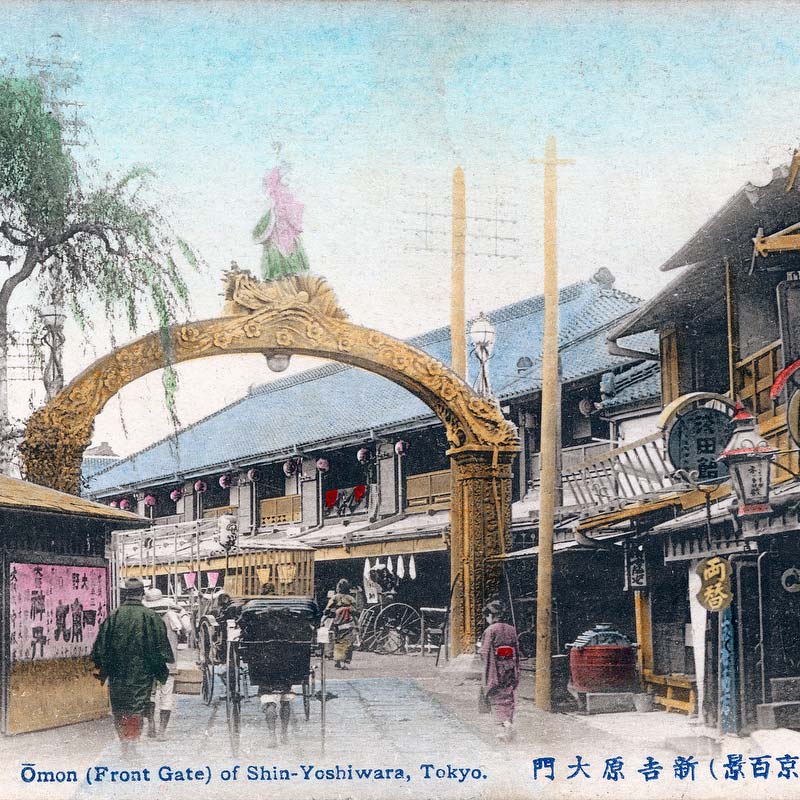
The enclosed district was surrounded by a moat and had a single guarded entrance gate. Yoshiwara courtesans (oiran) were not allowed to leave without written permission. It appears that at least in the 17th century even curious women from outside needed a pass to enter.
Around 1900, Yoshiwara was home to some 9,000 courtesans employed by 126 brothels divided into three classes: the first class o-mise (大店), the second class naka-mise (中店) and the third class ko-mise (小店). There were only five o-mise and four naka-mise. These establishments were expensive and quite exclusive, so the majority of the guests ended up in one of the ko-mise.
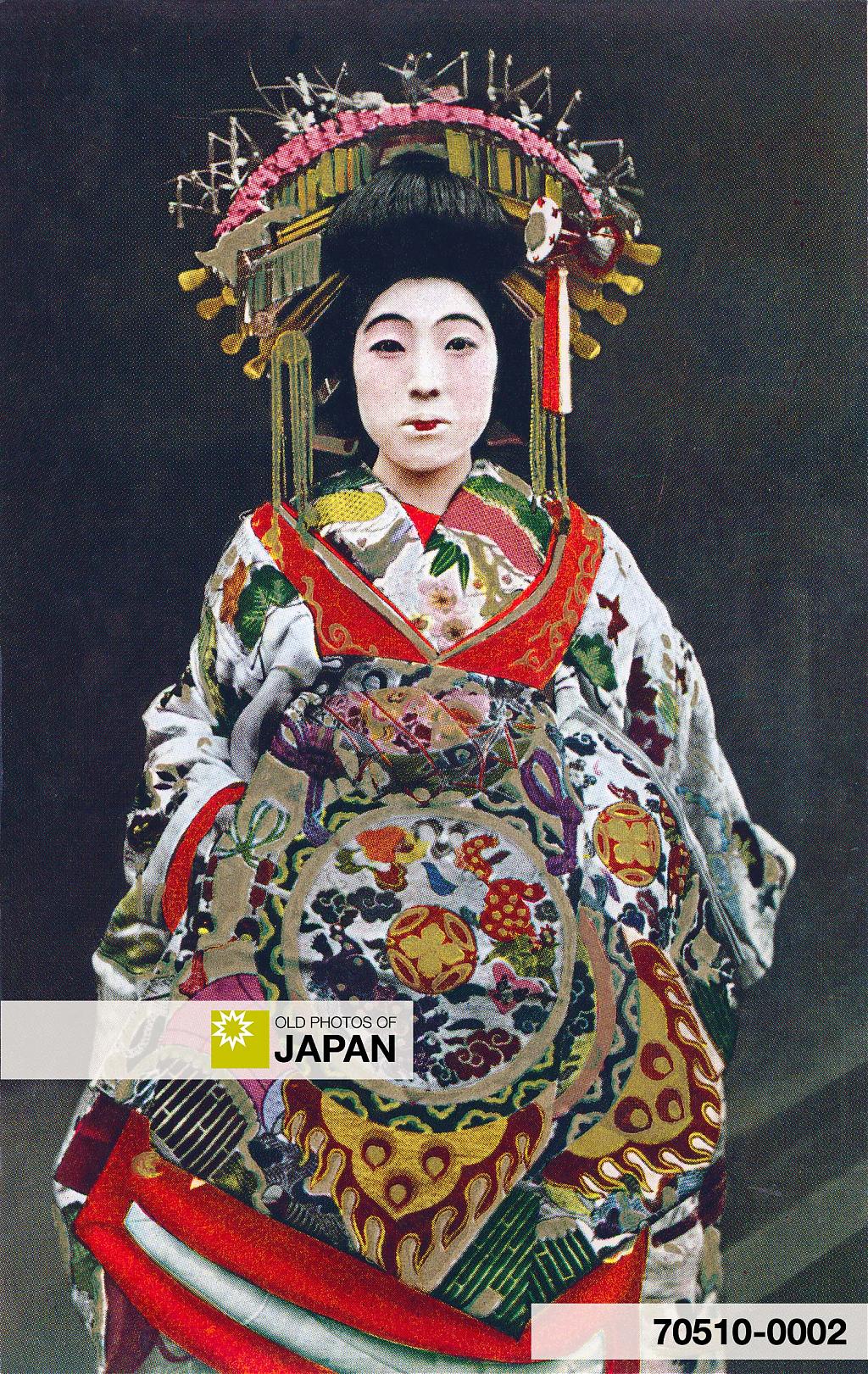
The prostitutes themselves were also divided into several classes. At the very top were tayuu, highly cultured women thoroughly trained in the classical arts of Japan, from calligraphy to dance. The English word prostitute appears extremely inadequate to describe them as they were artists in their own right.
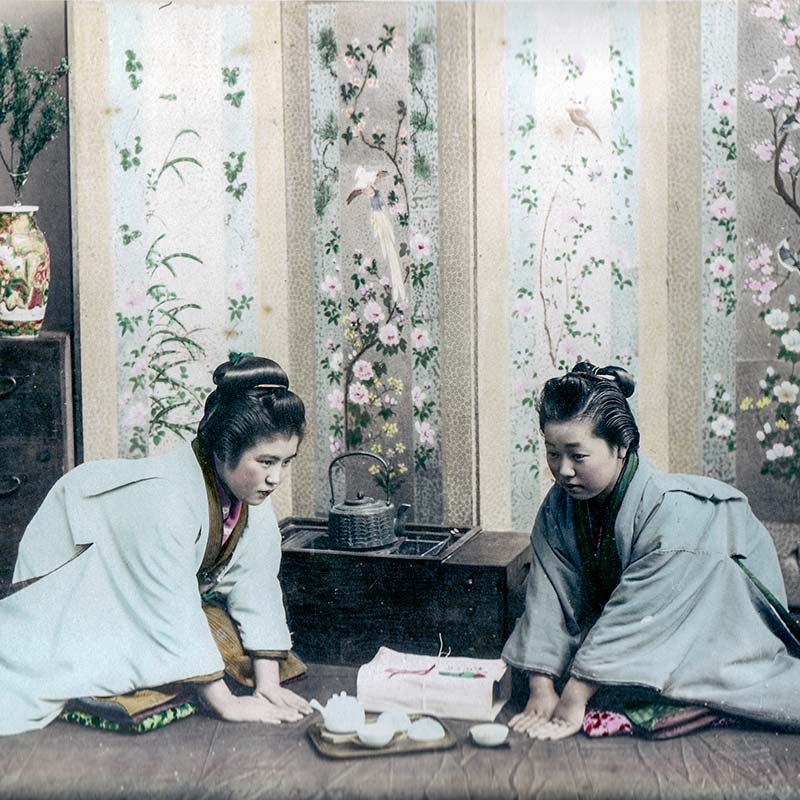
There were elaborate customs for visiting one of the brothels, especially in the case of the more expensive establishments, guests didn’t just walk through the front door. Introducing guests to Yoshiwara’s women of the night was the role of so called hikitejaya (also: hikitechaya, 引手茶屋), a type of tea house specifically set up for this function. At the time of this photo, there were only a limited number of them within the enclosure, but there were many more outside. Not all of them dependable.
Each hikitejaya employed generally about three or four female servants, who together with the mistress would run to welcome each guest with cheerful cries of irrasshai, a custom that can still be observed in today’s hostess bars.
After being escorted inside, new guests were shown photographs of several women, from which they selected one. Previous guests only needed to mention the name of the courtesan they wanted to meet.
One of the attendants would then take the guest to the selected brothel and assist with the negotiations, the optional arrangement of a geisha to provide music and dance and anything else the guest desired. She would even serve the guest during the meal that followed, especially making sure to keep his sake flowing.
Eventually she would guide him to the room where he would spend the night and quietly slip away as soon as the oiran arrived. As attending to a guest in this way was a lot of work, it was called mawasu (廻) from the kanji for moving around.
The guest returned to the hikitejaya in the morning and paid his bill there, not at the brothel. On the 14th and 30th of the month, hikitejaya went to the brothels to pay off their accounts.
The hikitejaya in this way acted as a protective buffer zone. If a customer did not pay, this information was quickly shared with the other hikitejaya. He was effectively boycotted and unable to enter any of the brothels.
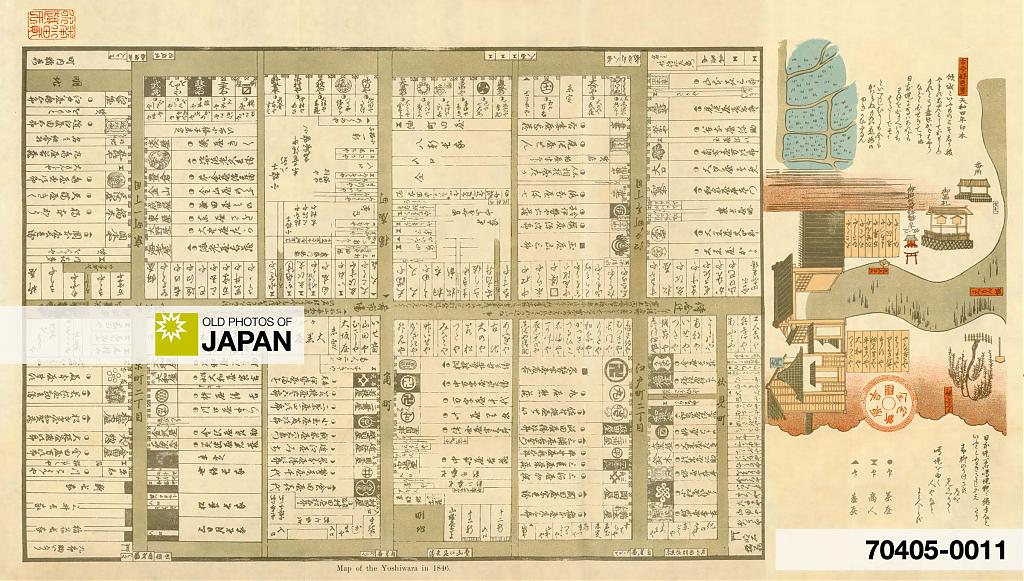
Yoshiwara was repeatedly destroyed by fire, the most recent and devastating ones in 1911 (Meiji44), 1923 (Taisho 12) and 1945 (Showa 20). Yet, it remained active as a licensed brothel district until 1958, when prostitution was officially abolished.
The new law however did not spell the end of prostitution. The area now houses a large number of soaplands, the modern Japanese monicker for brothel.
See prostitution in the THEMES menu for more images of red light districts and the people that worked there.
As it is unclear at which brothel this photo was shot, the Current Map shows the location of the former entrance gate, the Omon (大門), located in current-day Senzoku 4-chome, Taito-ku (台東区千束4丁目).
Notes
1 De Becker, J. E. (1899). The Nightless City or the History of the Yoshiwara Yukwaku. Max Nössler & Co.
Published
Updated
Reader Supported
Old Photos of Japan aims to be your personal museum for Japan's visual heritage and to bring the experiences of everyday life in old Japan to you.
To enhance our understanding of Japanese culture and society I track down, acquire, archive, and research images of everyday life, and give them context.
I share what I have found for free on this site, without ads or selling your data.
Your support helps me to continue doing so, and ensures that this exceptional visual heritage will not be lost and forgotten.
Thank you,
Kjeld Duits
Reference for Citations
Duits, Kjeld (). Tokyo 1910s: Yoshiwara Prostitutes, OLD PHOTOS of JAPAN. Retrieved on July 14, 2026 (GMT) from https://www.oldphotosjapan.com/photos/164/yoshiwara-prostitutes
Jessica Rains
I thought I’d add here, that perhaps the host clubs called “Kyabakura” (short for “cabaret club”) are sort of a replacement of hikitejaya and/or brothels. There were many in Asakusa, if I can remember correctly. I used to live in Asakusa and many of my male friends would talk about going to them, sometimes they’d even hook up with one of the hostesses.
#000466 ·
Platypus
I must admit I don’t think I’d ever have sought to learn about this if it hadn’t been for reading Moyoco Anno’s “Sakuran” some years ago. Yoshiwara and the prostitution therein seemed to have almost had its own unique culture. Thanks for the fascinating, informative post.
#000515 ·
Kjeld Duits
Thanks for your nice words!
#000516 ·