
Ainu chiefs played an important role in their society. Each Ainu village was administered by three hereditary chiefs.
Interestingly, they were not allowed to judge criminals. This function was performed by other members of the community.
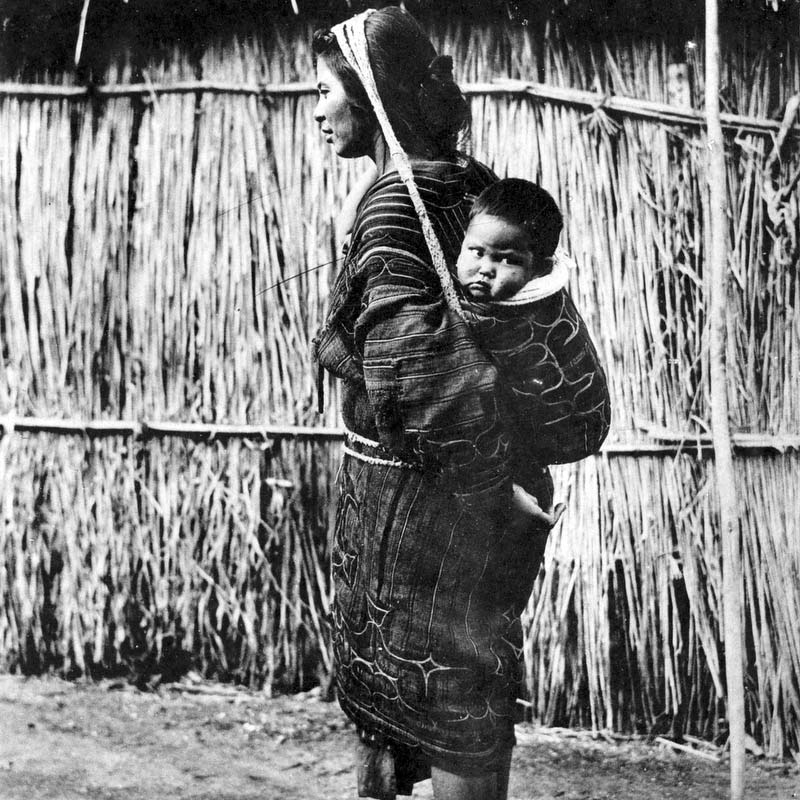
The Ainu are a distinctive ethnic group which used to have a culture completely different from that of the Japanese. This culture was virtually destroyed during the Meiji Period when policies aimed at assimilating the Ainu into Japanese culture outlawed their language and restricted their activities.
The word Ainu is derived from the word Aynu, which means human. These days some Ainu prefer the term Utari. During the Edo Period they were often referred to as Ezo, Yezo or Emishi.
Although the Ainu probably inhabited large areas of Japan, they are now mainly found in Hokkaido.
During the 20th century, heated debate raged over the origins of the Ainu. This was finally settled by the mid 1990’s when genetic studies showed that they are “the descendants of Japan’s ancient Jomon inhabitants, mixed with Korean genes of Yayoi colonists and of the modern Japanese.1
Notes
1 Diamond, Jared (June, 1998). Japanese Roots. Discover Magazine Vol. 19: 86-94.
Published
Updated
Reader Supported
Old Photos of Japan aims to be your personal museum for Japan's visual heritage and to bring the experiences of everyday life in old Japan to you.
To enhance our understanding of Japanese culture and society I track down, acquire, archive, and research images of everyday life, and give them context.
I share what I have found for free on this site, without ads or selling your data.
Your support helps me to continue doing so, and ensures that this exceptional visual heritage will not be lost and forgotten.
Thank you,
Kjeld Duits
Reference for Citations
Duits, Kjeld (). 1920s: Ainu Chief, OLD PHOTOS of JAPAN. Retrieved on September 3, 2026 (GMT) from https://www.oldphotosjapan.com/photos/144/ainu

There are currently no comments on this article.